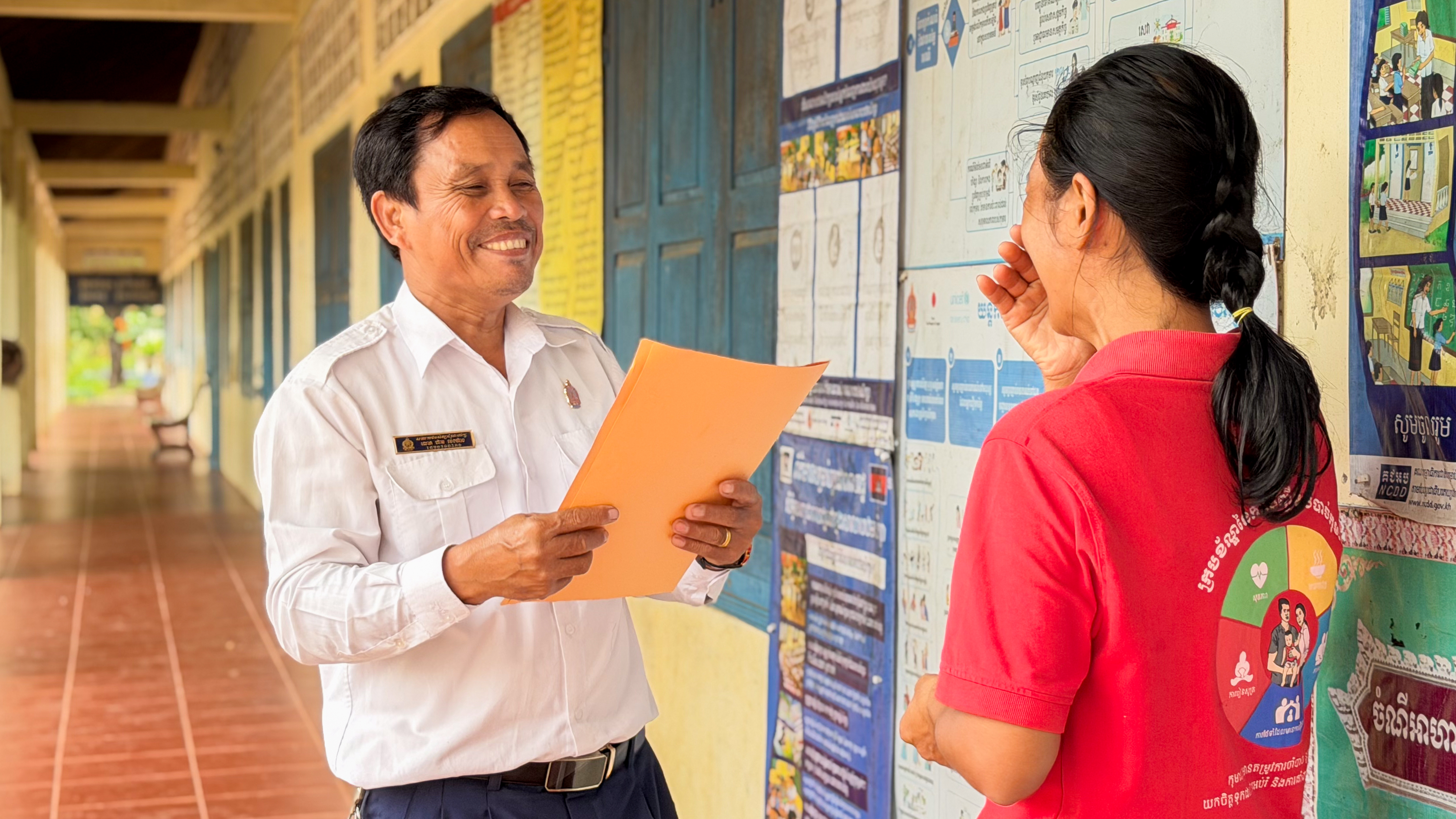
"Collaborating closely between the School-Based Child Protection Mechanism and the Community-Based Child Protection Mechanism is crucial for solving issues and protecting children from violence, while also enhancing their mental and physical health," stated Meng Heang, who effectively handled and referred child protection cases at his school.
Meng Heang is a 56-year-old school principal at a primary school located in a rural area of Kang Meas district, Kampong Cham, Cambodia, where some schools still face ongoing challenges, as many children report experiencing various forms of violence both at school and in the community. These issues persist due to the ineffective child protection system.
Over the past 38 years in the education sector, Meng Heang has consistently prioritized his students’ well-being, ensuring that they feel safe to learn and participate in class. However, Principal Meng Heang and his staff, despite their dedication, lacked the skills and properly identify and respond to these instances of violence. Worse, their connections to local authorities for referring cases were weak, leaving them struggling to address the painful issues they knew existed.
In July 2025, with funding support from UNIQLO through Save the Children Japan, Save the Children in Cambodia has been working closely with 43 targeted schools and in collaboration with local authorities to implement the “Elimination of Violence through Children’s Empowerment in Cambodia” project, aimed to promote child empowerment and strengthen child protection systems in schools and communities to end violence against children.
Things changed slightly when Meng Heang and his colleagues were invited to participate in training to improve the child protection mechanism at their school, which focused on equipping Child Protection Focal Points (CPFP) with the skills to identify and respond to violence against children. Most importantly, student council members also received training in psychological first aid to support their peers, as well as information on reporting channels for incidents of violence both at school and at home.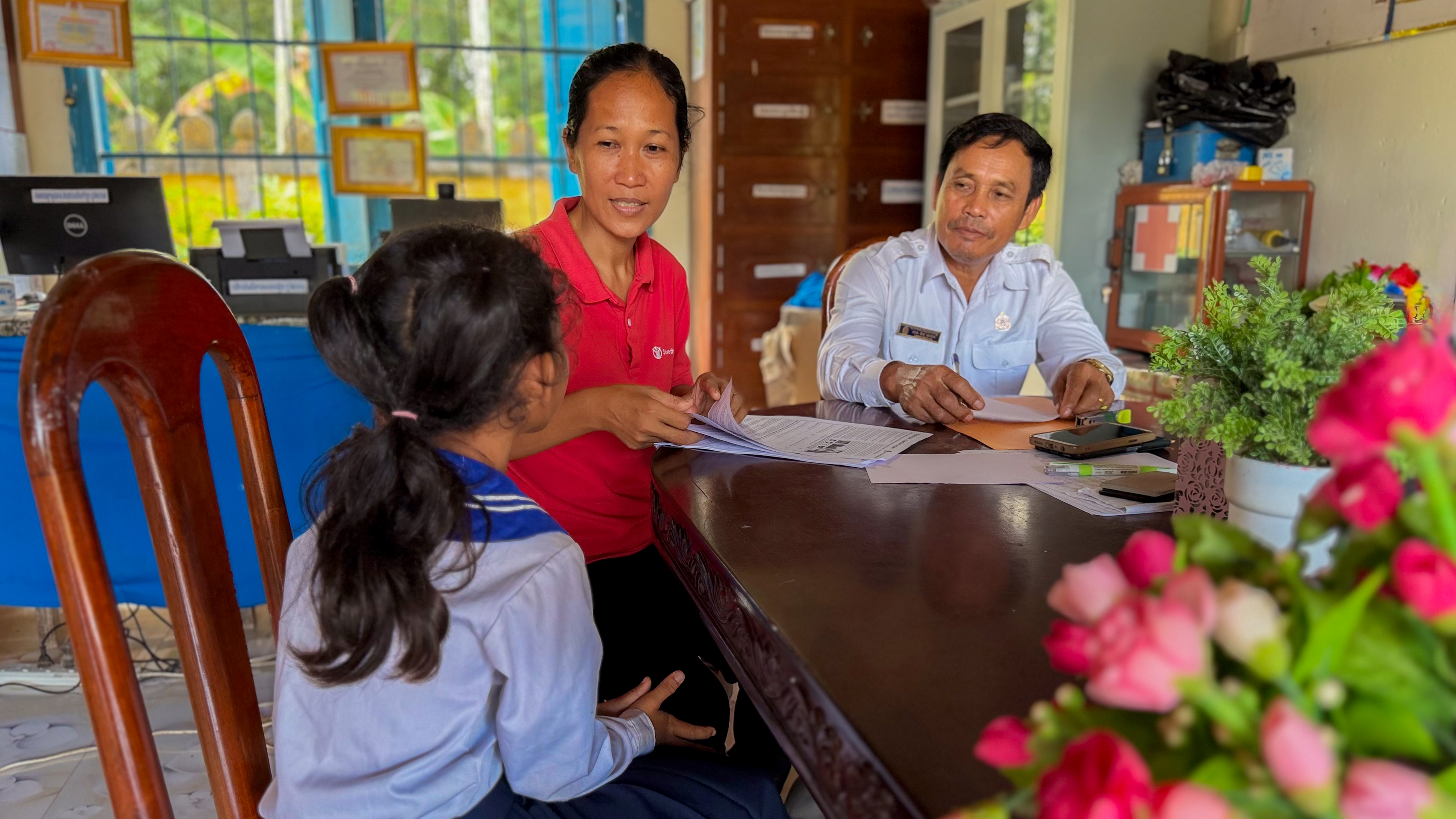
Under Meng Heang's leadership, the school management committee members regularly meet with CPFP, student council members, and relevant local authorities to identify and discuss risks of violence against children so that they can support and address these issues based on the severity and nature of the cases.
Recently, CPFP at Meng Heang’s school noticed a young girl in grade one named Moly*, who lives with her aunt. Moly said softly, “My aunt physically punished me whenever I didn’t do what she told me.”
After CPFP informed Meng Heang, he immediately met with SBM members to intervene in that case, which was successful. They invited the guardian for a discussion, during which they admitted to the actions. Meng Heang explained the reasons and the negative impact of physical punishment and had them sign an agreement. A few days later, with a follow-up interview with a victim girl and direct observation, Moly* is no longer suffering from violence.
In resolving children’s issues, Mach, a member of the School Management Committee and also a Commune Council member, is always involved. “Meng Heang and I work together to address children’s problems in school whenever information is received. “We pay close attention, sorting out all forms of violence within the school or, if it’s beyond our capacity, referring it to the Commune Council for Women and Children (CCWC). We are making sure of the students’ well-being, both mentally and physically.”
Sothea, the school’s child protection focal point, stated, “Regular committee meetings are significant for strengthening coordination between the school and relevant stakeholders to address and respond to children’s issues, ensuring timely intervention.”
Meng Heang’s actions not only help the students at his school but also promote broader community awareness and inspire others to be brave to report any form of violence against children to the village or local authorities when they see it.
Meng Heang added that he felt happy when he could solve the students’ issues, and he was even happier to see that they were safe and able to come and learn without fear.