
In the coastal province of Koh Kong, located in the west of Cambodia, 28-year-old Saychhun used to work hard on agriculture through the traditional way. “I often face obstacles in growing vegetables while striving to generate additional income for my family.” She recalled that her crops were often damaged by pests/disease, and heavy rain, which led to low productivity and income losses,” said Saychhun.
As a young mother living with her husband, elderly parents, and 4-year-old daughter, who studies in grade 2, the pressure was immense. Her husband works in construction, and Saychhun earned a living by fishing, but the fish stocks declined, they struggled to cover basic daily expenses, school supplies, and medical needs.
Things began to change when the Climate Change Adaptation, Resilience and Empowerment (CAREP) Activity was introduced in her community, funded by the New Zealand Ministry of Foreign Affairs and Trade, Save the Children, and the Mlup Promviiheathor Center (MPC) installed a demo net-house, where Saychhum learned smart agriculture techniques.
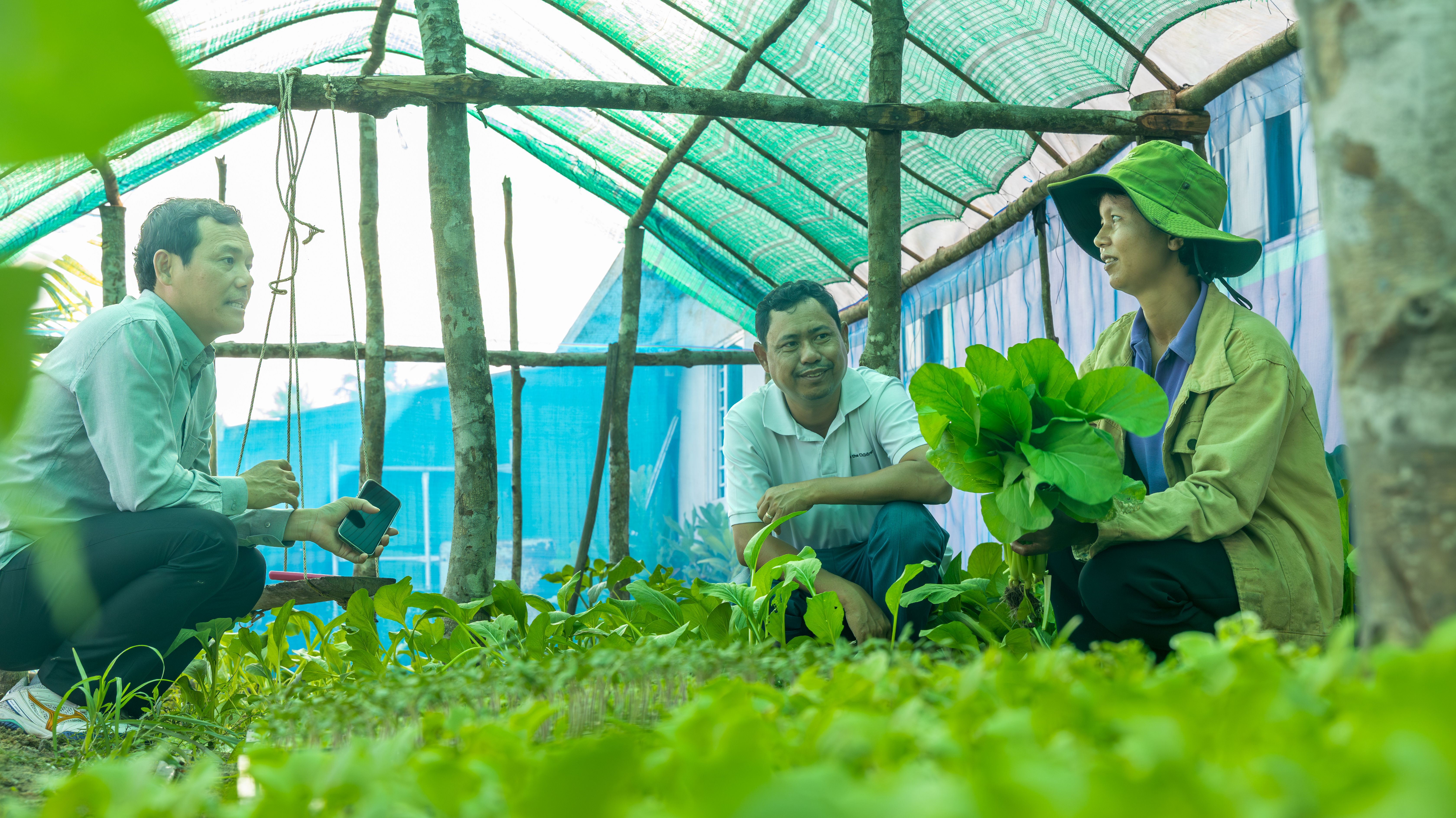
Inspired by a nearby CAREP Activity farmer's demo net-house, she decided to build a low-cost net-house on a budget. Over time, she collected old wood from her farmland and nearby areas. She invested in UV plastic (10 × 10 meters) for about $50 and a side net for $30. With a total investment of approximately $175, she built her first 8 x 10 meter net-house next to her home.
With creative ideas for her daughter, Saychhun also built a swing inside a small, low-cost net house where they can spend time together during the crop harvesting.
The production yields were quick. Since August, Saychhun has completed four production cycles of leafy vegetables, including spinach and curly cabbage. She earned around 400,000 riels (100 US dollars) in total income from vegetable sales. This income has contributed significantly to household expenses, school supplies for her child, food, and savings. Compared to her previous farming practices, her productivity and income have increased steadily.
Recognizing her initiative, the CAREP project recently provided Saychhun with additional materials. She has since constructed a second, larger net house (15m x 5m). Today, she is no longer just a subsistence farmer; she is a local supplier, providing fresh, safe produce to neighbors and local traders.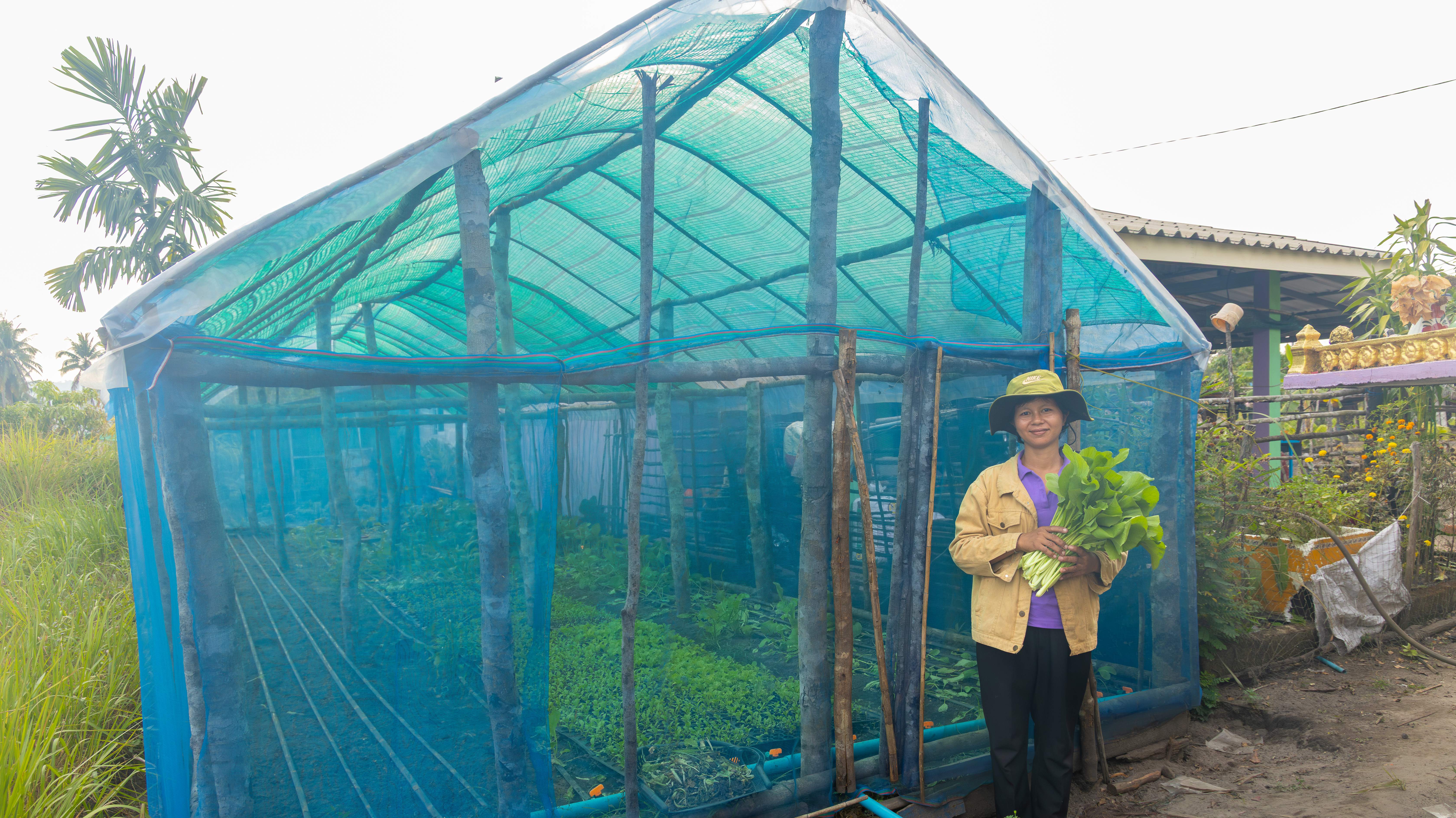
A local consumer, who came to buy fresh Choy Sum, said, “I often get fresh vegetables from Saychhun because they’re safe and chemical-free. I can support local women farmers to get extra income.”
Beyond the financial gains, Saychhun has been recognized and now serves as a role model, encouraging other women in her village to adopt climate-smart techniques.
"Home-based vegetable farming is the most suitable livelihood for women," she says with a smile, holding a fresh batch of Choy Sum. "It allows us to earn an income while staying close to our families, especially my little daughter. The vegetables grow fast, the market demand is strong, and the returns are quick."
Through her partnership with Save the Children and MCP, Saychhun has transformed from a vulnerable farmer into a confident entrepreneur, proving that with the right tools, women can lead the way in climate-resilient agriculture.